Is it a buyer’s market or a seller’s market?That is one of the first questions people ask when preparing to buy or sell a home. Buyers want to know whether they can negotiate a better

Dated: September 16 2026
Views: 15
Is it a buyer’s market or a seller’s market?
That is one of the first questions people ask when preparing to buy or sell a home. Buyers want to know whether they can negotiate a better price or ask for concessions. Sellers want to know whether they can still attract strong offers and receive top dollar.
The answer is not as simple as choosing one side.
Today’s housing market is not moving in the same direction everywhere. Some markets favor buyers, others favor sellers, and many are somewhere in between. Conditions can also vary from one neighborhood to another, which is especially important when researching real estate along the Grand Strand.
A buyer may have room to negotiate on one property while facing stronger competition for another. At the same time, one seller may need to adjust their price, while another may receive significant interest shortly after listing.
Understanding who has the upper hand starts with looking at the local numbers—not relying on national headlines or general assumptions.
One of the clearest ways to evaluate a housing market is by looking at the months’ supply of homes for sale.
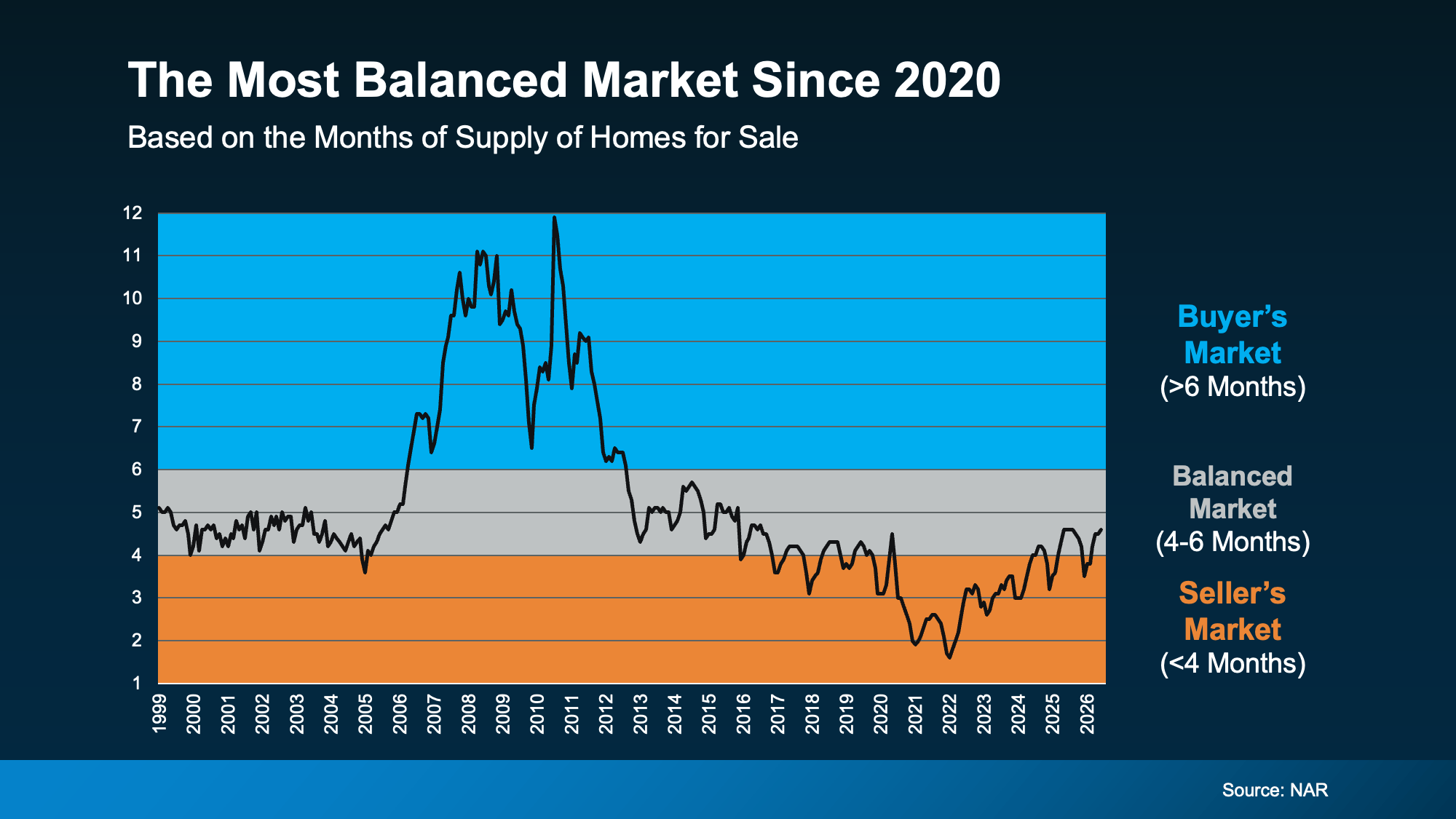
Months’ supply estimates how long it would take to sell all the homes currently on the market if no additional properties were listed. The calculation is based on the current number of available homes and the present pace of buyer demand.
Generally, months’ supply can be interpreted this way:
Fewer than four months usually indicates a seller’s market.
Four to six months generally represents a balanced market.
More than six months typically gives buyers greater negotiating power.
This number provides useful context for buyers and sellers because it shows how supply compares with demand. When fewer homes are available, buyers may face more competition. When inventory is higher, buyers usually have more options and sellers may need to be more flexible.
National Association of Realtors data places the overall months’ supply of homes at 4.6 months. Based on the general guidelines, that puts the national housing market in balanced territory.
This is a meaningful shift after years when conditions were more strongly tilted toward sellers. Buyers now have more opportunities in many areas, but that does not mean they automatically control every negotiation. Sellers may still have an advantage when demand for a particular home, neighborhood, or property type remains strong.
A balanced market means neither side should assume that the old rules still apply.
Buyers cannot assume every seller will accept a lower offer. Sellers cannot assume every home will attract immediate interest at any price. Both sides need to understand the specific conditions surrounding the property before deciding how to proceed.
In a balanced or buyer-leaning market, buyers may have more time to compare properties and make informed decisions. They may also have opportunities to negotiate the purchase price, repairs, or seller concessions.
That negotiating room depends on the property and its immediate market conditions.
A home that has been available for a longer period may present a different opportunity than a newly listed property attracting strong attention. Buyers should also consider how many similar homes are currently for sale and how quickly comparable properties are selling.
Before submitting an offer, Grand Strand buyers should ask:
How many similar homes are currently available?
How long has the property been on the market?
Is buyer demand strong for this type of home?
Is the seller’s price supported by current local conditions?
Is there room to request repairs or concessions?
Is the property likely to receive competing offers?
The answers help determine whether a buyer should negotiate aggressively, submit a strong offer quickly, or take a more measured approach.
The goal is not simply to get the lowest possible price. It is to write an offer that reflects the property’s actual market position while protecting the buyer’s interests.
A more balanced market does not mean sellers cannot receive a strong price. It does mean pricing and strategy matter more.
When buyers have additional choices, they can compare homes more carefully. A property that is not positioned correctly may sit on the market while competing homes attract attention. In some situations, the seller may eventually need to consider a price adjustment or offer concessions.
Sellers should ask:
How many homes are competing with mine?
How quickly are similar properties selling?
Does my price reflect current demand?
Are buyers receiving concessions on comparable homes?
What expectations should I have for negotiations?
What could cause buyers to choose another property?
A seller’s strategy should be based on current neighborhood conditions rather than what happened several years ago—or even what happened recently in another market.
Where inventory remains limited and buyer demand is strong, sellers may still have meaningful leverage. In those cases, a well-positioned property may attract strong offers and continue to increase in value.
Where buyers have more options, sellers may need to be more realistic about pricing and more open to negotiation.
Yes. Buyers and sellers can both have advantages in the same overall housing market.
A buyer may find a seller willing to provide thousands of dollars in concessions on one home. Another buyer may need to submit their best offer immediately to avoid losing a different property to competing interest.
Likewise, one homeowner may need to reduce the asking price, while another seller may benefit from strong demand and rising prices.
These situations are not contradictory. They reflect how local and property-specific the housing market has become.
National data can provide helpful context, but it cannot explain exactly what is happening in every Grand Strand neighborhood. Even within the same general area, supply and demand may differ based on the homes currently available and the buyers actively searching for them.
The biggest mistake is assuming the entire market favors one side.
A buyer who automatically expects a major discount could lose a desirable home in an area where sellers still have the advantage. A seller who assumes buyers will accept any price may overlook changing conditions and risk having the property remain on the market.
Both approaches are based on assumptions instead of evidence.
The better approach is to evaluate the months’ supply, current inventory, demand, pricing, and recent activity surrounding the specific property. That information should guide the offer, listing price, repair requests, concessions, and overall negotiation strategy.
Today’s housing market is highly local. What is happening nationally—or even elsewhere along the Grand Strand—may not reflect the conditions affecting a particular home.
Local market knowledge helps buyers determine how much competition they may face and whether they have room to negotiate. It helps sellers understand how to price their home and what buyers may expect during the transaction.
The right strategy depends on what is happening in the property’s immediate market.
The Litchfield Company | Christie’s International Real Estate can help buyers and sellers review the local numbers, understand who currently has leverage, and create a strategy based on the specific market—not a national headline.
Nationally, the housing market is in balanced territory with a 4.6-month supply of homes. Redfin data also shows that more cities are experiencing buyer-friendly conditions, making this the most buyer-friendly market in nearly six years.
However, buyers do not have the upper hand everywhere, and sellers have not lost their leverage in every market.
The answer depends on the local supply of homes, current buyer demand, and the property being bought or sold.
If you are considering a move along the Grand Strand, start by finding out what the numbers show in your specific area. A local real estate professional can explain whether the market currently favors buyers, sellers, or neither—and what that means for your next step.
This market is not one-size-fits-all. Your strategy should not be either.
Source: Keeping Current Matters

....
Is it a buyer’s market or a seller’s market?That is one of the first questions people ask when preparing to buy or sell a home. Buyers want to know whether they can negotiate a better
Modern, move-in ready, and filled with thoughtful upgrades! Built in 2023, 3001 Reamer Drive features 3 bedrooms, 2.5 bathrooms, an open-concept layout, chef’s kitchen, Carolina room, spacious
South Carolina’s own Stephen Colbert tells us how in Does This Taste Funny?, the excellent cookbook he wrote with his wife, Evie McGee Colbert (who’s also from Charleston):“If you
The Coastal Carolinas Association of REALTORS® recently released its July 2026 market report. The numbers show that single-family homes and condos are moving in different directions.Keep in mind
 Copyright © 2026 of the Coastal Carolinas Association of REALTORS® MLS. This information is deemed reliable, but not guaranteed. Neither the Coastal Carolinas Association of REALTORS®, nor the listing broker, nor their agents or subagents, are responsible for the accuracy of the information. The buyer is responsible for verifying all information. This information is provided by the Coastal Carolinas Association of REALTORS® for use by its members and is not intended for any other purpose. Broker ReciprocitySM information is provided exclusively for consumers' personal, non-commercial use and may not be used for any purpose other than to identify prospective properties consumers may be interested in purchasing.
This data is updated on a daily basis. Some properties which appear for sale on this web site may subsequently have sold and may no longer be available. September 18, 2026 6:21 PM UTC
Copyright © 2026 of the Coastal Carolinas Association of REALTORS® MLS. This information is deemed reliable, but not guaranteed. Neither the Coastal Carolinas Association of REALTORS®, nor the listing broker, nor their agents or subagents, are responsible for the accuracy of the information. The buyer is responsible for verifying all information. This information is provided by the Coastal Carolinas Association of REALTORS® for use by its members and is not intended for any other purpose. Broker ReciprocitySM information is provided exclusively for consumers' personal, non-commercial use and may not be used for any purpose other than to identify prospective properties consumers may be interested in purchasing.
This data is updated on a daily basis. Some properties which appear for sale on this web site may subsequently have sold and may no longer be available. September 18, 2026 6:21 PM UTC
